Article: The History of Propolis: From Ancient Remedy to Modern Ritual Care
The History of Propolis: From Ancient Remedy to Modern Ritual Care
The History of Propolis: From Ancient Remedy to Modern Ritual Care
Long before modern skincare, propolis was already valued as a dense, resin-rich substance associated with protection, preservation, and practical care. Its story stretches from ancient civilizations to contemporary ritual skincare — carrying the same quiet logic of purposeful support.

Ancient Origins
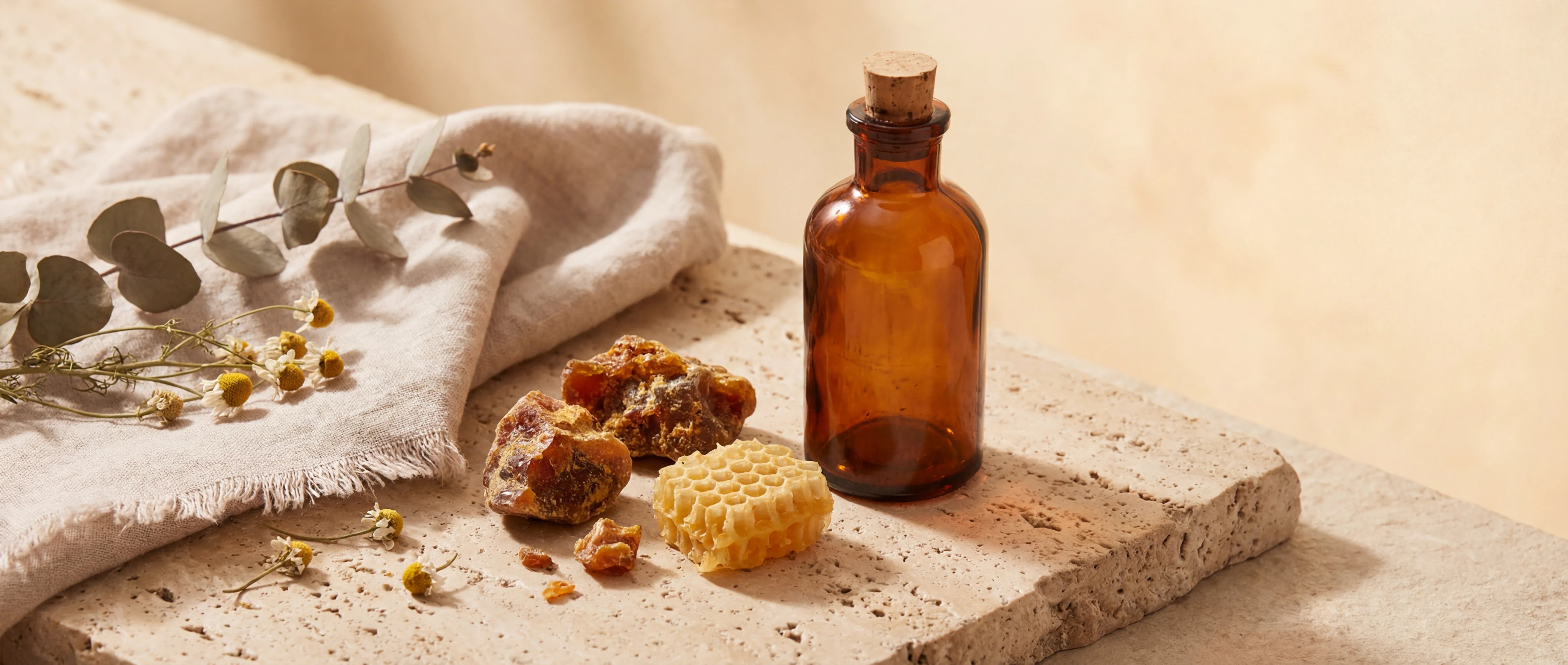
The earliest historical associations of propolis are linked to ancient cultures that valued bee-derived substances for both ceremonial and practical uses. In Egypt and across the Mediterranean world, resinous hive materials were respected for their protective character and their place in early care traditions.
What made propolis significant even then was not trend, but observation. It belonged to a world where people repeatedly returned to materials that felt dependable, purposeful, and naturally aligned with preservation and comfort.

From Folk Tradition to Apothecary Practice
As herbal care traditions evolved, propolis continued to appear in practical topical rituals and preparation methods. Later, apothecary culture gave it an even clearer role: an ingredient chosen for function, density, and usefulness rather than decoration.
This was the world of measured composition, tactile materials, and formulation built around real purpose. Propolis fit naturally into that philosophy — and still does.

Why Propolis Endured
Many ingredients disappear with changing trends. Propolis did not. Its unique appeal lies in its structure, its weight, and the sense of substance it brings to care. Across generations, it has remained associated with supportive, grounded rituals rather than fleeting cosmetic novelty.
That endurance is what gives propolis its timeless quality: it continues to feel relevant because it still answers the same human need for comfort, protection, and deliberate care.

From Ingredient to Ritual
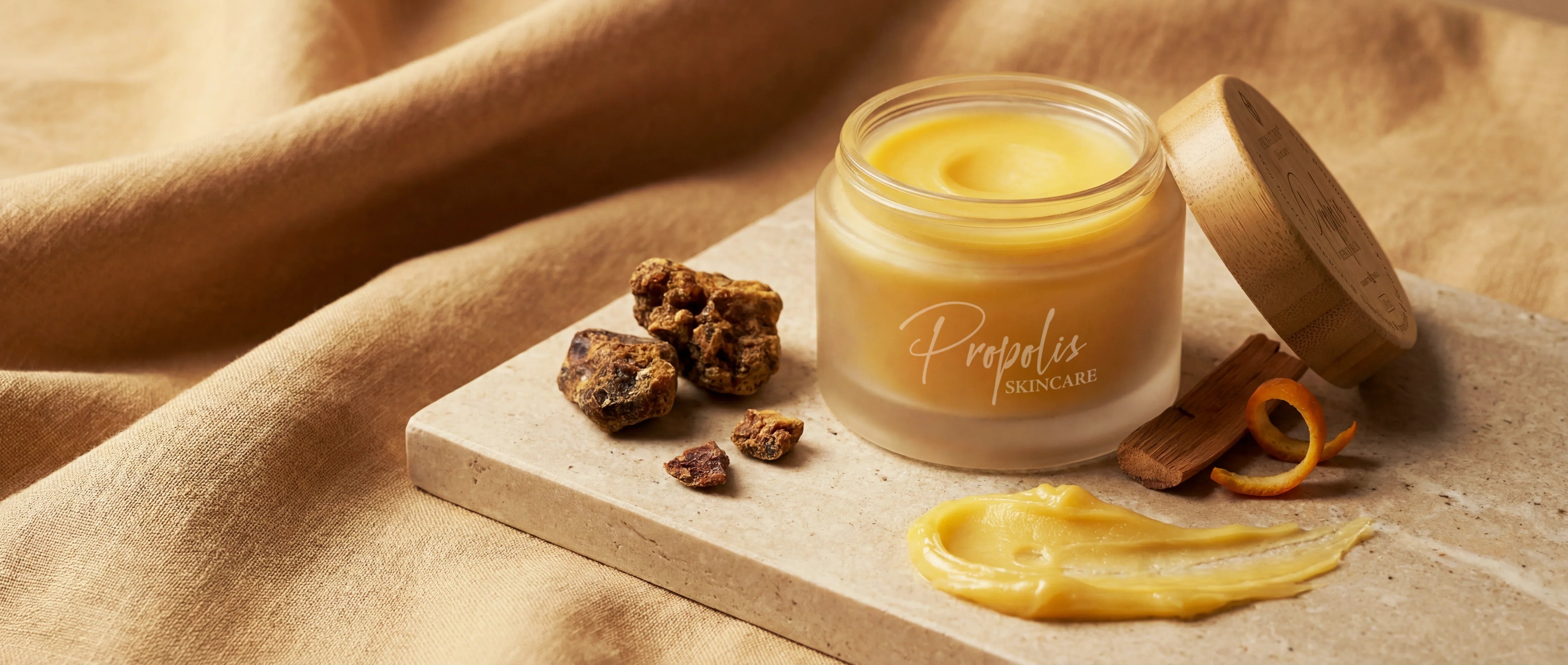
In modern skincare, propolis has found new relevance in balm-based care, barrier-support rituals, and formulations that prioritize calm, resilience, and daily comfort. It suits a slower, more intentional kind of skincare — one built around protection rather than excess.
At Pronaturin, that is precisely why propolis matters. It is not treated as a decorative trend, but as a foundational material with both historical depth and contemporary purpose. From ancient remedy to modern ritual, its identity remains remarkably intact.